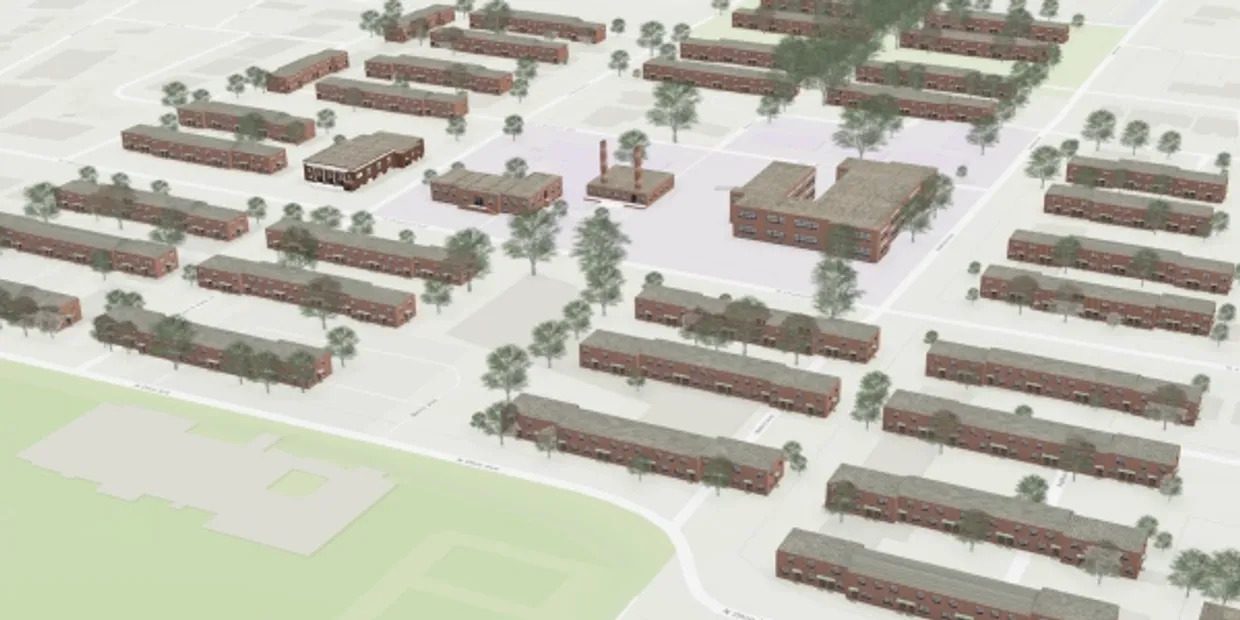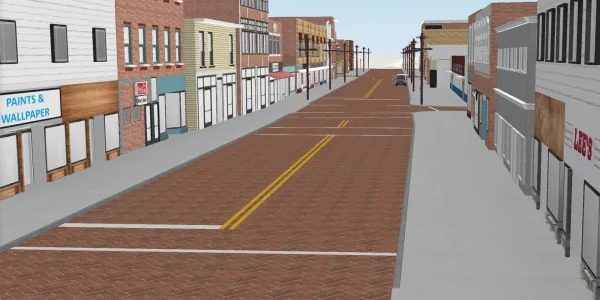


Poindexter Village holds a significant place in American history as one of the nation's first public housing models designed specifically for African Americans. Construction on Poindexter Village begin in 1939. President Franklin D. Roosevelt dedicated Poindexter Village on its opening day in 1940.
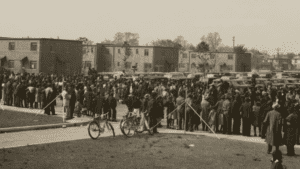
For generations, Poindexter Village was a flourishing, close-knit community and a hub for Black culture and success. However, racially bias policies and system inequities slowly eroded its foundation while divestment in infrastructure contributed to its decline. By the turn of the 21st century, the neighborhood was slated for demolition due to the outdated condition of the buildings.
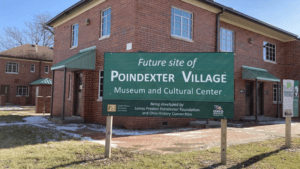 Despite a dedicated and passionate effort to preserve Poindexter Village, 33 of the original 35 buildings were demolished beginning in 2013 as part of a larger effort to revitalize the Near East Side. In 2014, the James Preston Poindexter Foundation was founded to ensure the preservation of the remaining two buildings. In 2016, Ohio History Connection Board of Trustees voted to acquire the remaining two buildings and took ownership in 2017. In 2019, Poindexter Village became a state historic site with the passage of Ohio Senate Bill 192, which was sponsored by Senator Hearcel Craig. More than just a historic landmark, the two remaining Poindexter Village buildings stand as a testament to the perseverance of those who called Poindexter Village home.
In 2020, an interpretive plan was completed in partnership with 106 Group. Shelbi Toone was then hired as the project director and site manager for the museum in 2021. A marketing and operating plan study was completed in 2022 by ConsultEcon, Inc., in partnership with Renter Mentor. A Museum Experience & Campus Visioning Study was completed with REALM Collaborative in 2023. In 2024, the interpretive plan was updated by Amplifier to add the significance of the nearby Union Grove Baptist Church.
In 2025, Moody Nolan, a Columbus-based architecture firm, was selected to design the Poindexter Village African American Museum on Champion Avenue. The museum is expected to open in 2028